
Team staffers, federation leaders, media members, and at least one referee and player have dealt with travel issues.
The U.S. State Department has become a major player in the World Cup.
On the eve of the tournament, many involved are facing travel issues as they try to enter the U.S.
At least one player and referee have been held up or denied, while many team staff members and federation leaders have had their visa applications rejected. Journalists are also facing widespread denials or single-entry limits, and Iran’s federation reportedly claimed the U.S. will only let the team enter one day before any match.
The Trump administration has instituted travel policies that ban or restrict visitors from several World Cup participating countries. The administration claims some policies are in the interest of national security, while others seek to limit the spread of disease. These policies have included carveouts for players and staffers, but not fans.
“The denial of visas for journalists from certain countries, or the rejection of a visa for a coach of a team, as well as single-day visas for specific foreign national teams, this is anathema to what this tournament is supposed to be about,” New York City Mayor Zohran Mamdani said Monday.
The 104-match tournament kicks off Thursday in Mexico and runs through July 19, when New Jersey will host the World Cup final. The U.S. will host 78 matches, including every contest after the Round of 16.
“The Department of State is working closely with the White House, the Department of Homeland Security, and FIFA to support qualifying national teams’ travel to participate in World Cup events through our visa process,” a State Department spokesperson said in a statement on Monday. “At the same time, the Administration will not waver in upholding U.S. law and the highest standards of national security and public safety in the conduct of our visa process. We adjudicate each visa application on a case-by-case basis after rigorous review and thorough vetting to determine whether the individual is eligible under U.S. law.”
Iran’s Ongoing Visa Challenges
The Iranian federation has experienced World Cup-related travel issues since before the war with the U.S. began in late February.
Members of the federation nearly skipped the draw in December after leaders had visa troubles, but eventually resolved the issues and attended. While traveling to FIFA Congress in Vancouver in late April, federation president Mehdi Taj was denied entry at the border in what the Canadian Foreign Affairs Minister called “unintentional.”
Last month, the national team moved its base camp from Arizona to Mexico after FIFA had previously denied a request to move all of Iran’s matches there. Taj said the move came after an Iranian request, while Mexican President Claudia Sheinbaum said the U.S. “doesn’t want the Iranian national team to stay overnight.”
All Iranian players received visa approval, but more than a dozen team staffers and federation officials, including Taj, did not, according to The New York Times. Head coach Amir Ghalenoei did receive his visa, despite some reports to the contrary, which Mamdani cited. The Iranian soccer federation accused the rejections of being “vindictive behavior” aimed at keeping out “key managerial and administrative members” of the team.
Taj also said the team is allowed to enter the U.S. “only one day before the match,” according to Iranian media.
The State Department official said in a statement Saturday that “the visas necessary for Iran to compete in the World Cup, including for athletes and necessary support staff, have been issued.” The official also said: “We will not allow the Iranian team to abuse this system to sneak terrorists into the United States under false pretenses.”
Swiss Striker’s Last-Minute Hold-Up
On the morning of the Swiss team’s departure for the World Cup, one of the players found out he wouldn’t be able to travel.
Swiss travelers are not required to obtain a visa for short stays in the U.S., but they must submit an application for the Electronic System for Travel Authorization. The entire team, including forward Breel Embolo, had approved ESTA applications on the morning of their travel. But less than three hours before the flight, Embolo learned his application required further checks, including court documents related to a recently finalized conviction stemming from a 2018 altercation, the team said.
“The Embassy’s inquiries focused specifically on whether any physical violence had been involved,” the team’s media officer said in a statement. “This was not the case.”
On Tuesday, the team traveled without Embolo to San Diego, where it’s training at the San Diego Jewish Academy. Embolo had an appointment at the U.S. Embassy in Bern the next day and got approved on Thursday. He rejoined the team over the weekend, though he did not play in the Saturday friendly against Australia.
Bafana Bafana’s Delays
The South African national team, also called Bafana Bafana, delayed its travel to the World Cup due to visa issues.
The country’s sport minister, Gayton McKenzie, claimed in a May 31 post on X that the federation’s visa process was “embarrassing & grossly unfair towards the players & coaching staff,” and said, “We are being made to look like fools.” Later that day, McKenzie posted that all players received their U.S. visas and only four staff members still needed approval.
The next day, McKenzie changed his tone, saying in a post, “the fault is entirely on our side.” The federation also released a statement apologizing “to the nation for these unexpected travel delays” and thanking the U.S. Consulate in Johannesburg. The team has since traveled to Mexico, where it will compete in the tournament’s opening match against the host nation in Mexico City on Thursday.
Journalists Barred or Limited
The International Sports Press Association wrote a letter to FIFA on Friday to “intervene” in cases where World Cup-accredited media members have been “wrongfully denied entry” to the U.S.
“There are many cases: Iranian colleagues, African colleagues, some of whom have been given single entries, so if their team goes to play in Canada or Mexico and they follow it, they can no longer return to the States,” wrote the organization’s president, Gianni Merlo. “The cases are countless and, I repeat, unacceptable.”
Ebola Outbreak
Last month, the Centers for Disease Control and Prevention banned visitors from three African nations, including the Democratic Republic of the Congo, due to the ongoing Ebola outbreak. The team canceled a farewell celebration in the capital of Kinshasa.
Andrew Giuliani, who leads the White House’s World Cup task force, told ESPN in May that the team must isolate for 21 days before the tournament. The players have been outside of the country playing abroad, but some staff members have left more recently.
The team’s friendly against Chile in Cádiz, Spain, was canceled by the city’s mayor over health concerns, and will now be played without fans or media on Tuesday in Orleans, France. The team is scheduled to travel to its base camp in Houston on Thursday.
In late May, the World Health Organization said that there have been over 900 suspected cases of the Bundibugyo strain in the DRC, and 223 suspected deaths.
Somalian Ref Denied
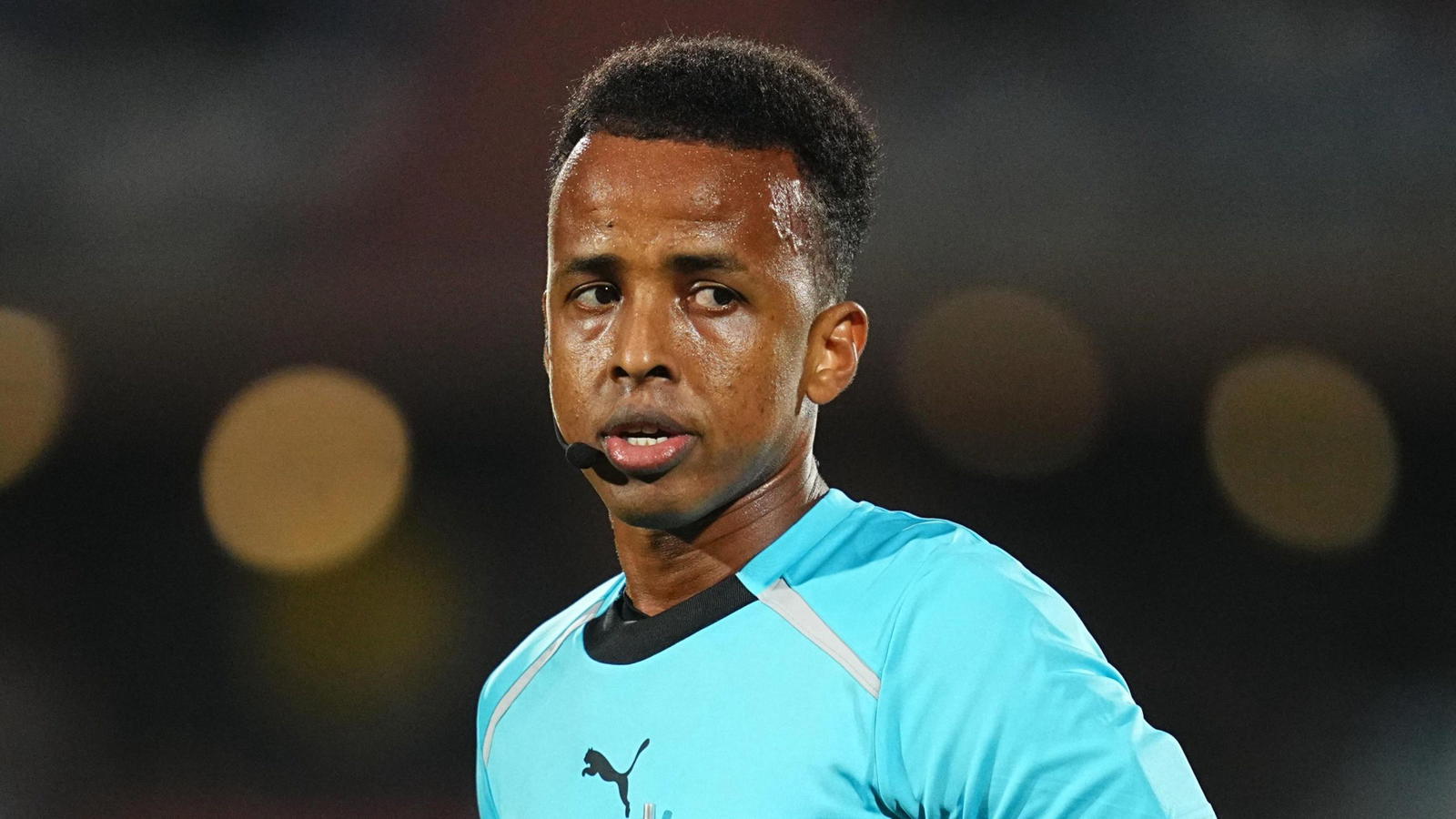
Somali referee Omar Artan was denied entry in Miami as he traveled to officiate his first World Cup matches. The CAF Best Male Referee of 2025 was set to be the first-ever Somali World Cup official.
Somalia is on the list of countries banned from traveling to the U.S., but an anonymous FIFA representative said last week that Artan’s “visa issues have been fully resolved.” He has since returned to Istanbul.
“FIFA can confirm that match official Omar Abdulkadir Artan will be unable to train and officiate at the FIFA World Cup 2026 after he was denied entry into the United States,” a spokesperson for the governing body said in a statement Monday. “FIFA is not involved in host country immigration processes, including visa adjudications, and has been informed by authorities that Mr Artan’s status will not be changed at present.
“In line with previous FIFA events, a host government ultimately determines who receives a visa and who is admitted into their country.”
Artan released a statement thanking “the football family for their messages” and sending well wishes to his colleagues. “Despite the circumstances, I am in a positive mood and I am focused on the next challenges in my refereeing career,” Artan said. “I would like to thank FIFA and CAF for all their support and I promise to keep my refereeing levels up as I concentrate on the future.
Artan also told The New York Times that he “had the right visa,” but was interviewed for 11 hours, detained for a few more, then sent back to Istanbul without a reason. U.S. Customs and Border Protection said Artan was “determined to be inadmissible due to vetting concerns.”
“Denying him entry to the United States and preventing him from officiating scheduled matches harms not only him personally but also undermines football’s commitment to fairness, merit, and the spirit of fair play,” said Ciise Aden Abshir, an advisor to the country’s sports ministry and former national team player.
Teams Searched on Tarmac, Arriving for Friendly
A viral video on social media Monday appeared to show Senegalese players being screened with security wands on the tarmac after landing in the U.S. Another video showed the Uzbekistan National Team being screened with wands and having their bags sniffed by dogs as they disembarked the bus arriving for their friendly against the Netherlands in New York City.
The videos prompted a strong reaction online, with fans and pundits claiming the teams had been treated disrespectfully.
“They said to me it’s the rules, but in the end the check was only for us,” Uzbekistan coach and Italy legend Fabio Cannavaro said after the match. “You need to ask them.”
Iraqi Player Questioned for Hours, Photographer Turned Away
Over the weekend, as the Iraqi national team arrived at O’Hare Airport in Chicago, striker Aymen Hussein was questioned for nearly seven hours and his phone was inspected, according to Reuters. A team photographer was held for over 10 hours and also had their phone checked, but was denied entry to the country.
Fans Face Bans, Rejections
While the U.S. made exceptions to travel bans for players, their families, and staff, fans have not been given an exemption to those rules. Fans from Haiti, Iran, Senegal, and the Ivory Coast are all facing bans, as well as travelers from the DRC due to the Ebola outbreak.
But fans from other countries are also having issues. The president of a prominent Moroccan supporters organization, Azzedine Al Attraoui, told multiple outlets that dozens of fans who bought tickets have had their visas denied without an explanation. (A Moroccan player, Zakaria El Ouahdi, also experienced a hold-up with his FIFA process.)
Scottish fans have also spoken out about ESTA issues and having their approvals revoked before the tournament.
On Tuesday, the Iranian federation claimed that its supporters tickets had been revoked, though it’s not clear how many had been sold or where those fans would be traveling from. Iranian visitors are currently banned from traveling to the U.S.
This is a developing story and will be updated.
Source: Frontofficesports.com