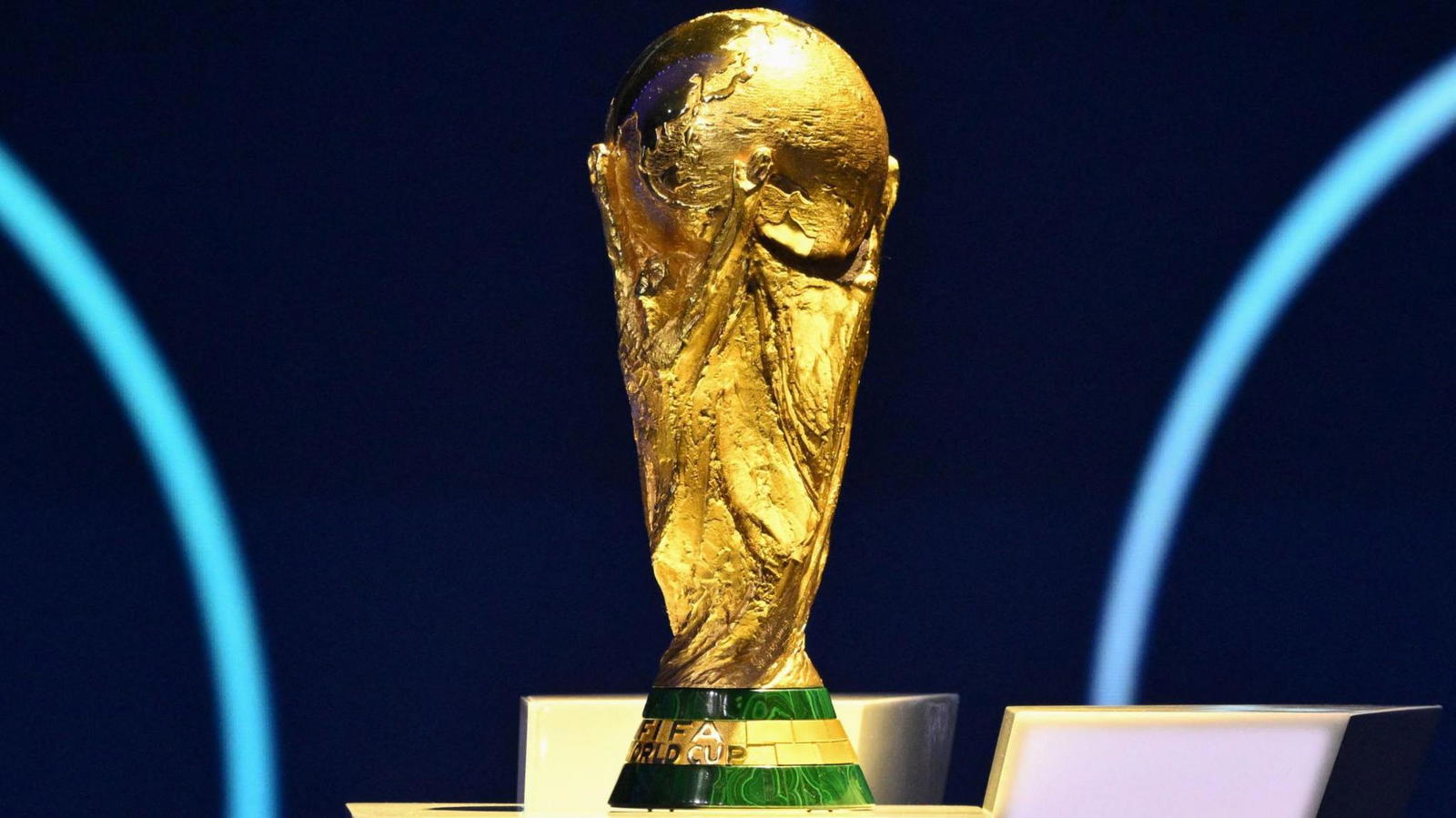


No matter how eventful your summer has been, it can’t possibly compare to FIFA president Gianni Infantino’s. Over the past month, soccer’s arch supervillain was attending two World Cup games a day via a private jet allegedly gifted to him off the books by Qatar to preside over a bloated but massively successful tournament. He was also flying way too close to the sun, putting together an audacious scheme that may now be his undoing. Infantino’s descent began last week, when most of the soccer world instantly turned against him after the Times of London revealed his secret, comically evil plan to pimp out the World Cup. This week he’s in exile from FIFA’s Swiss headquarters and holed up in Rabat, Morocco, looking like Richard III without his horse (though probably still with his plane), and the boot he may soon get won’t be golden.
Infantino’s big plan was to sell equity in the World Cup by creating a subsidiary called FIFA Forward Enterprise for investors to purchase 21 percent of the commercial rights to future tournaments, valued at $20 billion by JPMorgan. The lead investor was to be Joshua Kushner — brother of Donald Trump’s son-in-law Jared. Never mind that this summer’s World Cup alone earned FIFA an estimated $15 billion — pawning off the sport’s nonprofit-run crown jewel to venture capitalists did not land well with nearly everyone involved in the game. The reaction has been swift, and the usually nimble Infantino was caught flat-footed.
Continental confederations called emergency meetings the next day; member nations of UEFA (Europe), AFC (Asia), and Concacaf (North and Central America and the Caribbean) unanimously condemned Infantino’s scheme, which constituted a majority of FIFA’s 211 members, making his proposal dead on arrival. FIFA withdrew the proposal last weekend, but that hasn’t stopped the revolt. This week, a group of unnamed European soccer associations is reportedly all in on ousting Infantino by paralyzing FIFA’s bureaucratic processes and boycotting all tournaments — neutering their commercial potential — until he steps down. Several British and European soccer federations have rescinded support for him, and even some of his old allies are still withholding their support.
Another shoe dropped on Tuesday, when Jordan’s Football Association alleged that Infantino’s office threatened to withhold money owed to Jordan if the country didn’t show support for his reelection next year. Then on Wednesday, retired legend Luis Figo wrote a scathing op-ed in the Daily Mail. “I’ve seen some rogues in my time in the game, but what I’ve seen in the past ten days is the lowest, most deceitful, and cravenly self-interested behavior I’ve ever witnessed,” he wrote. Infantino has reportedly reached out to other retired players — the type who are paid to show up to FIFA events — for support, but has been denied. On Instagram, Infantino has been reposting photos of him and retired legends at the World Cup, before all this went down, like he’s processing a breakup.
Later on Wednesday, in a last-ditch effort to save his position and affirm his supposed support within FIFA, Infantino wrote an apology letter to the FIFA Council and member nations, which included the past-exonerative line “Mistakes were made.” But give the man at least a little credit for having the chutzpah to also write, “With the project withdrawn, FIFA will no longer tolerate any attacks on its integrity, good governance, and due process, and will take all necessary measures to protect and safeguard its name and reputation.” What was it that Samuel Johnson once said about patriotism?
Several FIFA figures declined to attend Infantino’s crisis meeting in Morocco, including the chief operating officer, who described FIFA Forward Enterprise last week as “the project of one person.” UEFA was unimpressed by Infantino’s letter, and on Thursday responded that the boycott remains in place, saying its “conditions have not been met,” that it had lost confidence in Infantino’s presidency, and that “yesterday’s announcement that some people employed by the FIFA president (and whose careers depend on his favor) agree with him changes nothing.” UEFA is also planning to undertake an independent valuation of Infantino’s proposal to see if he was planning to hawk the World Cup below market rate.
In an era ruled by strongmen and billionaires seemingly immune to oversight, this kind of resistance feels unusually inspiring. Until recently, Infantino was set to run unopposed in next year’s election. Yet less than a month after Spain lifted the World Cup trophy, he’s been begging the likes of Kuwait and Sri Lanka for votes of confidence. Is it remotely possible that the forces of money and power may actually be held in check this time? With FIFA, it’s hard to know.
There’s a morality tale at the center of all of this. Infantino seemingly had it all. The son of working-class Italian immigrants in Switzerland, Infantino skillfully ascended the ranks of sports administration first at UEFA, then at FIFA. He assumed the FIFA throne in 2016 on a sentiment of reform following the arrests of its previous leaders for racketeering and wire fraud, but afterward Infantino gradually opened the door of the game to the vast commercial potential of autocratic regimes looking to sportswash their reputations. (The list is long, but highlights include deflecting attention about Qatar’s deplorable human-rights abuses as the nation hosted the 2022 World Cup.)
For years, Infantino was talking up the Club World Cup, a summer club tournament, held last year in the U.S., meant to rival Europe’s popular Champions League, despite player protests (taking place during their hard-earned offseason). Infantino even bent his own rules to allow Lionel Messi’s Inter Miami team to play in it. But advertisers were hesitant to buy into this untested, unnecessary tournament that was selling few tickets. Then, shortly before the tournament started, Saudi Arabia purchased the broadcaster DAZN for $1 billion, and, wouldn’t you know it, DAZN soon became the official broadcast partner of the Club World Cup in a $1 billion deal — though surely not the same $1 billion of prize money promised to be disbursed among the teams. Infantino had also recently designed the 2030 World Cup to take place across three continents for the first time ever — Europe, Africa, and South America. Due to FIFA’s own rules about rotating the tournament among continents, Infantino (a strict rule-follower when it suits him) had effectively cleared the field for Saudi Arabia, a member of the Asian confederation, to bid for the 2034 version unopposed. Trump likes to call Infantino “a piece of work,” but that’s not quite right, as Infantino seems very easy to deal with — if you’re rich or powerful. He has excelled at making the ruling class’s dreams come true.
After nearly ten years in office, there was just one thing missing from Infantino’s reign. He had yet to fully wet his own beak. He earns $6 million per year as president of FIFA. But Infantino planned to initially chair the FIFA Forward Enterprise offshoot, then become its chief executive or commissioner when his term runs out in five years. It would have increased his salary to $30 million annually before bonuses. He just had to drum up interest for it. This year’s World Cup was his chance.
In hindsight, all the crass elements Infantino introduced for this year’s tournament make perfect sense. He was showcasing how the game could be sold. It’s hard to single out which meddling was the most brazen. Was it the outrageous ticket prices or the mid-game “hydration break” commercials? Was it adding a blandly global halftime show during the World Cup final (circumventing FIFA’s own rules)? Was it the U.S. red card that was overturned after Trump called Infantino to complain? Was it scheduling afternoon games in Philadelphia and Miami in July? Was it shoehorning Tom Cruise, the Muppets, and Michael Buffer’s “Let’s get ready to rumble!” into the final? Or maybe it was the venal FIFA Peace Prize Infantino invented and gave to Trump to soothe his ego after he was passed over for a real Nobel Peace Prize (but before Trump abducted the president of Venezuela and started a war with Iran). As the Times of London pointed out, these were all brash signals to investors: Infantino could do whatever he wanted to the game to maximize revenue potential — and no one could stop him. If you thought selling group-stage tickets for thousands of dollars, splitting matches into quarters, forcing players to play the biggest games of their lives in dangerous heat, or having Ronaldo and Ronaldinho dune-buggy Madonna in for halftime was bad, imagine what actual investors might demand.
Lost in all this is the fact that Infantino’s investment scheme was a bad deal. His plan promised three payments of $20 million or more to member nations over ten years in exchange for a smaller stake in future proceeds of the World Cup — whose TV rights alone continue to skyrocket in value. Who would agree to this after witnessing how resilient and popular the tournament is, despite Infantino’s attempts to bastardize it? Not to mention the nature of the deal, a no-bid process where the prominent beneficiary is Donald Trump’s daughter’s brother-in-law? There was also a short deadline (53 days) given to member associations to approve the offer, which is a classic feature of any scam. Perhaps Infantino’s biggest political miscalculation of all, though, was that his plan presented everyone the exceedingly rare opportunity to grandstand about morals and sanctity in a sport that often rewards deceit, gamesmanship, time wasting, and cheating. Was Infantino blinded by his own complete disregard for the game he’s in charge of? Did he really think no one else in soccer cares about this?
The World Cup remains a unicorn in this day and age. Sports are already over-commercialized. Everybody is aware of this, and no sports fan I know actually likes it, yet it feels unstoppable. Club soccer especially is drowning in commercialism. Teams are owned by billionaires and oligarchs. Ugly sponsor logos are plastered all over the uniforms. The shirts and players and managers change every year. Ticket prices are outrageous. Gambling has infested the game. The player-transfer window is its own stupid competition off the field. Seasons blur together, and in the social-media era, the entire enterprise can seem like an always-on slop factory.
The World Cup, on the other hand, refreshingly features none of this, and the people attempting to wrest power away from Infantino thankfully seem to care about that. Nationalism and copious advertising aside, there is a purity to the tournament in its own fully formed aesthetics, traditions, history, and scarcity. Rather than lean into its strengths and prestige, Infantino attempted to turn the World Cup into a gaudy financial instrument to be controlled and exploited by the same people who already own everything else.
Will the sport of soccer win and an avatar of the rich and powerful actually lose? We’ll soon find out. Infantino is suddenly isolated: Trump is not returning his calls (shocking), and Secretary of State Marco Rubio declined a meeting with him earlier in the week. Saudi Arabia isn’t supporting him, to Infantino’s dismay. He is a persuasive guy, but he looks cornered. Even the FIFA Council is split. Influential European members are determined to see him out the door, and many member nations seem aware of which way the wind is blowing. His only path to survival will be leveraging the votes of developing nations that depend on FIFA grants to operate. Infantino has many supporters in the African confederation, which backed him on Thursday, and in parts of Asia. Argentina and Mexico are standing with him, too. Plus the longer the opposition goes without putting forth an alternative candidate only helps Infantino. Still, getting out of this one may be beyond even his powers of charm. As long as UEFA’s boycott remains in effect, who’s going to watch any soccer competition that’s missing nearly all of the best teams and players?
Infantino’s downfall would also be an opportunity. The next FIFA president, whoever it is, could take the organization in a far better direction. Think of all the good it could do to have a president who isn’t another kleptocrat or strongman, who could uphold the integrity of the sport and its greatest tournament and ensure the game remains accessible to fans. Hopefully Infantino’s reign ends up being a cautionary tale about taking things much too far. This is still FIFA, though, so there’s a chance it will instead serve as a blueprint for some future shrewder leader who’s even worse.
Tags:
- sports
- 2026 world cup
- fifa
- gianni infantino
- reckonings
- politics
- soccer
- downfalls
- audio article
- More
Source: New York Magazine