
- NFL
- NBA
- MLB
- NHL
- World Cup
- Betting
- SN 140
- Archive
- NFL
- NBA
- MLB
- NHL
- Soccer
- NCAAF
- NCAAMB
- NCAAWB
- WNBA
- Boxing
- MMA
- WWE
- F1
- NASCAR
- Golf
- Tennis
- College
- High School
- Darts
- Horse Racing
- Olympics
- More Sports
- Fantasy
- Betting
- Prediction Markets
- Watch
- The Scene
- Tickets
- Stadium Guides
- United States [English]
- Argentina
- Australia
- Brasil
- Canada
- India
- 日本
- México
- 대한민국
- España
- ไทย
- United Kingdom
- United States [Español]
- Việt Nam
- About Us
- Careers
- Privacy Preferences
- Terms of Use
- Privacy Policy
- Cookie Policy
The World Cup field has slimmed down markedly in recent days, with 16 sides exiting stage left upon the conclusion of the group stage.
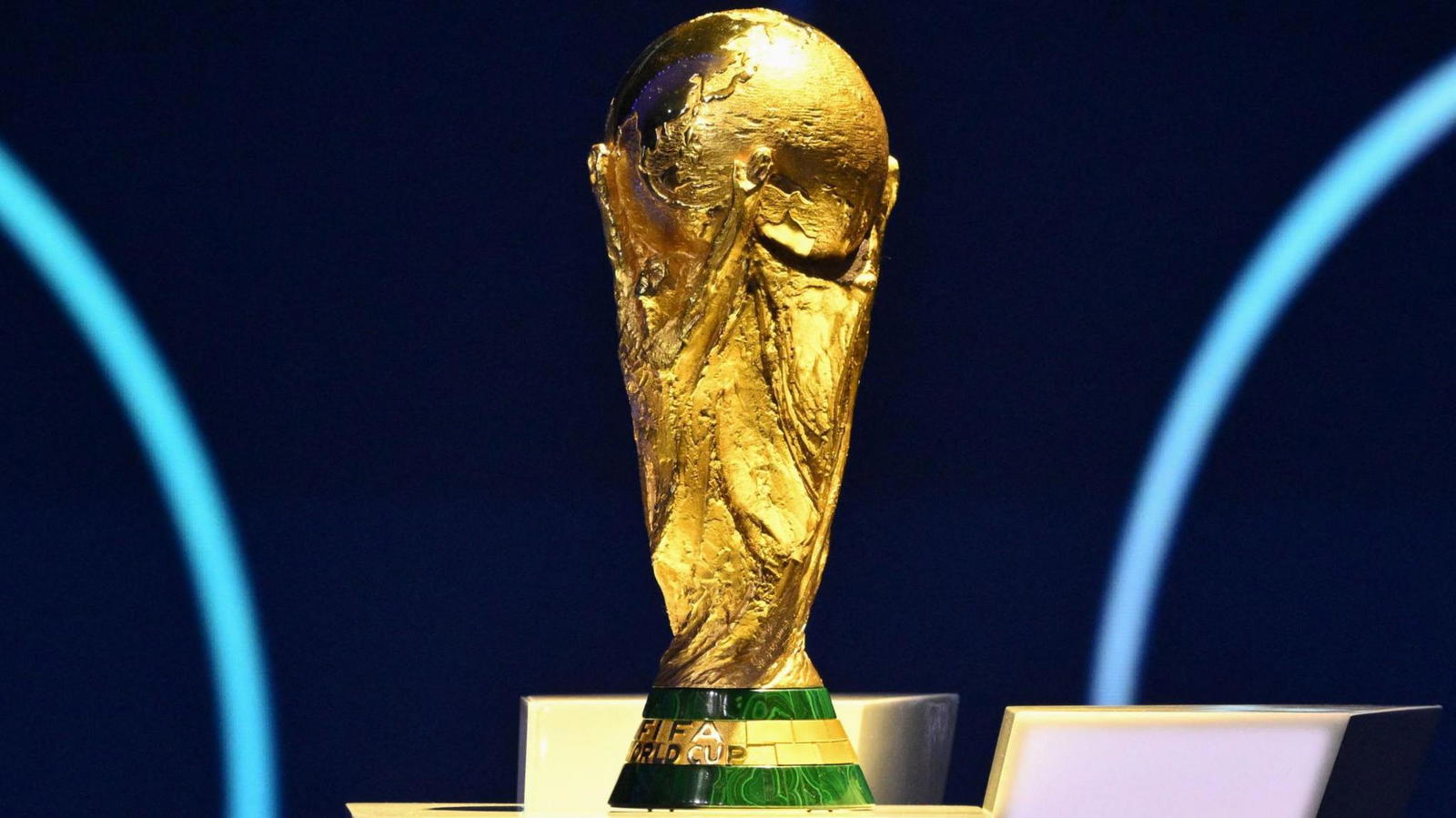
For the 32 teams that remain, it's hard not to dream of hoisting the World Cup trophy over one's head. Soccer is filled with haves and have-nots, to be sure. But the famed ornament is tantalizingly close, particularly for the world's most talent-laden sides.
The Round of 32 is here, its presence offering a warm embrace for those gifted enough — and fortunate enough – to fall under its spell. Who will bask in the glory of the knockout stage? And who will shrivel under its glare? The next few days of action will go a long way in helping us gleam who are the true contenders and pretenders in this year's World Cup field.
With that, here's a look at the Round of 32 bracket for the 2026 World Cup.
2026 WORLD CUP HQ: Latest World Cup news | Full World Cup schedule | Buy World Cup tickets
World Cup Round of 32 bracket
World Cup Round of 32 schedule
The matchups in the Round of 32 were predetermined and the bracket was filled out as each team clinched first, second or third-place (for the eight-best third-place finishers) in their respective groups.
MORE WORLD CUP NEWS:
- Printable World Cup bracket
- Expert World Cup Round of 32 predictions
- Ranking remaining World Cup teams 1-32
- 3 sleepers to watch in World Cup knockouts
- Best teams out of the World Cup knockouts
World Cup bracket Round of 32
The bracket above comes in two halves. And each will produce a World Cup finalist.
One half of the bracket features the following teams, from which one lucky finalist will emerge:
- Germany (Group E winner)
- Paraguay (Group D third-place)
- France (Group I winner)
- Sweden (Group F third-place)
- South Africa (Group A runner-up)
- Canada (Group B runner-up)
- Netherlands (Group F winner)
- Morocco (Group C runner-up)
- Portugal (Group K runner-up)
- Croatia (Group L runner-up)
- Spain (Group H winner)
- Algeria (Group J third-place)
- United States (Group D winner)
- Bosnia & Herzegovina (Group B third-place)
- Belgium (Group G winner)
- Senegal (Group I third-place)
The other half of the bracket will produce the other World Cup finalist from the following list:
- Mexico (Group A winner)
- Switzerland (Group B winner)
- Brazil (Group C winner)
- Colombia (Group K winner)
- Ghana (Group L third-place)
- Australia (Group D runner-up)
- Egypt (Group G runner-up)
- Cape Verde (Group H runner-up)
- Argentina (Group J winner)
- Ecuador (Group E third-place)
- Ivory Coast (Group E runner-up)
- Japan (Group F runner-up)
- Norway (Group I runner-up)
- England (Group L winner)
- DR Congo (Group K third place)
- Switzerland (Group B winner)
- Austria (Group J runner-up)
MORE: Teams qualified for the World Cup's Round of 32
Teams in Round of 32
Mexico became the first side to reach the Round of 32 on June 18. Like Mexico, the United States and Argentina also mathematically qualified after just two group matchdays.
The other 29 qualifiers filtered their way into their knockout stage pairings by the end of the group stage on June 27, with Algeria and Austria proving the final teams to get their ticket to the Round of 32.
Here are the 32 nations that reached the 2026 World Cup knockout rounds.
MORE: What are the best no-sweat bets in the 2026 World Cup?
How does Round of 32 work in World Cup?
Known to some as the knockout stages, the Round of 32 sees the tournament shift to a single-elimination format.
There are no points earned. There are no standings or draws. There's simply a winner or loser, with matches decided by extra time or penalty shootouts if the scoreline is tied after 90 minutes of regulation.
What happens if knockout matches finish tied?
Each Round of 32 matchup — and beyond — must be decided by the end of the match. If teams are tied after 90 minutes of regulation, the match goes into a 30-minute period of extra time.
If the deadlock persists across the allotted time, the match then transitions to penalties. Five players from both sides line up for shots from the penalty spot. The team that finishes with more goals than their adversary is declared the winner, moving deeper into the competition.rmine the team that moves on to the quarterfinals.
The Round of 32 pairings are set in advance. Teams that finish in first place in the group stage match up against teams that are runners-up (or third-place finishers) in their respective groups.
How teams advance in World Cup
There are 32 teams that reach the World Cup after emerging from qualifying matches in their respective regions.
Group Stage
Once they get to the World Cup, the first obstacle awaiting them is the group stage. In 2026, the 48 teams were split up into 14 groups of four teams each.
The group stage consists of typical round-robin group play with each team playing the other three once. Three points are awarded for every win in the group stage, one for a draw, and none for a loss. If teams are tied on points, goal difference and goals scored represent the first tiebreakers.
The top two finishers in each group and eight-best third-place finishers advance to the knockout stage with each group winner, runner-up and qualified third-place finisher slotted into a predetermined bracket that starts with the Round of 32.
Knockout Rounds
Beginning with the Round of 32 through to the final, every match is single elimination. Teams advance from the Round of 32 to the Round of 16, then to the quarterfinals, then the semifinals and lastly to the final.
As explained above, if teams are tied at the end of the 90 minutes of regulation, the teams play 30 minutes of extra time followed by a penalty shootout, if necessary.
David Suggs
David Suggs is a content producer at The Sporting News. A long-suffering Everton, Wizards and Commanders fan, he has learned to get used to losing over the years. In his free time, he enjoys skateboarding (poorly), listening to the likes of Stevie Wonder, Marvin Gaye and D’Angelo, and penning short journal entries.
Source: Sporting News