

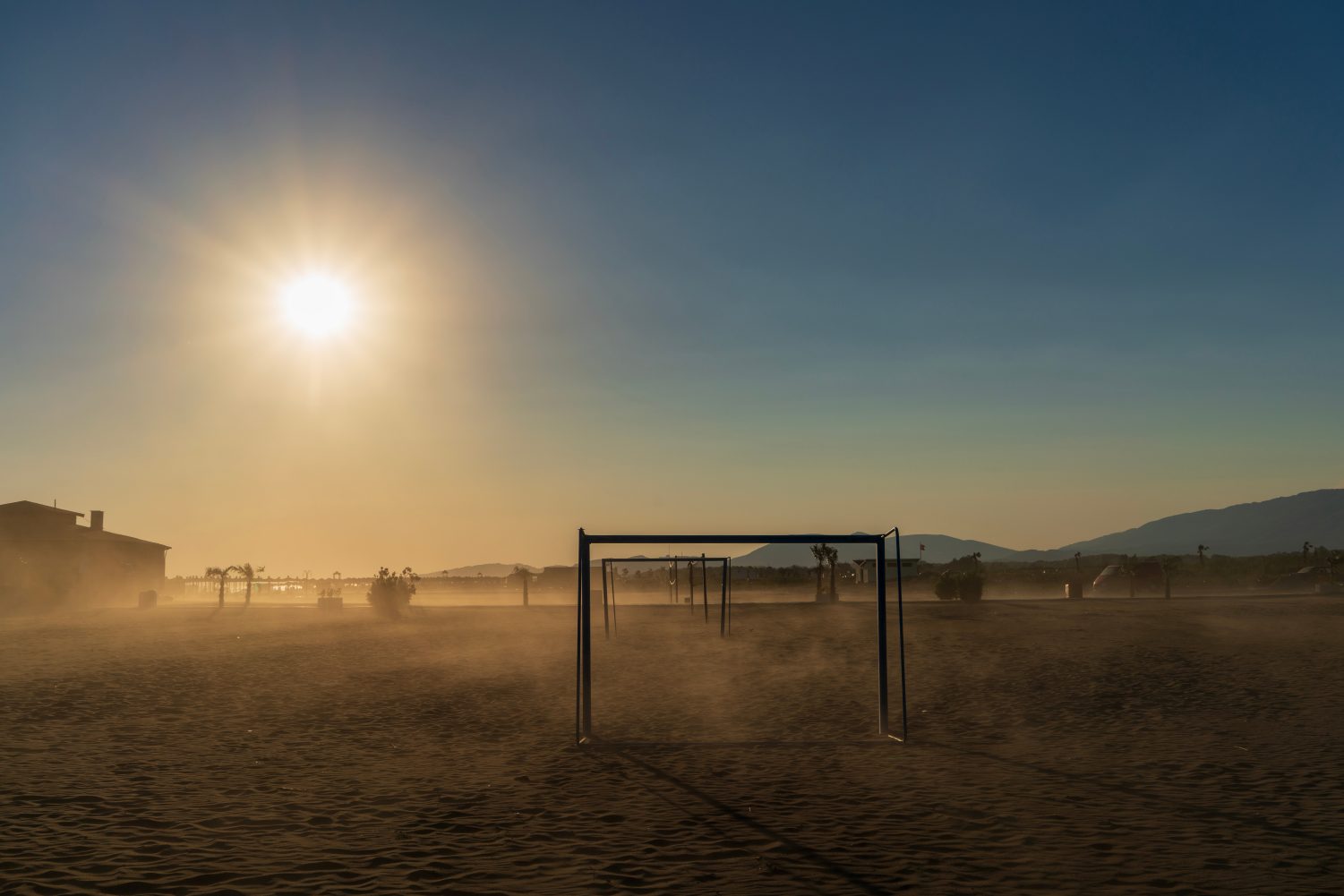
Temperatures have already started getting uncomfortable in Dallas. If you’re feeling the heat, imagine what it’s like for the European players calling North Texas home during the 2026 World Cup.
Sweden and Czechia arrived in Texas earlier this month to begin setting up their official World Cup base camps. The teams will call Dallas-Fort Worth home until they are eliminated from the tournament or one is crowned as champion, although that appears to be a long shot by most estimates.
The Czech team will stay in Fort Worth and practice at the newly constructed Mansfield Stadium, while Sweden is using FC Dallas’ facilities to prepare for the group stage.
Sweltering soccer
The heat and humidity have been among the cup’s leading storylines. An NPR analysis recently found that over a third of World Cup matches could be played in “dangerously hot, humid” conditions, with only four of the stadiums — Dallas Stadium among them — equipped with roofs and air conditioning.
Last summer, when the U.S. hosted the FIFA Club World Cup, Atletico Madrid midfielder Marco Llorente said, “It’s impossible” when speaking to reporters about afternoon games. FIFPro, the international players’ union, called the 2025 tournament a “wake-up call” for officials organizing games in extreme heat.
Players have already expressed some discomfort over the heat this summer. A visibly sunburnt Declan Rice, one of England’s leading stars, told reporters recently that the heat will take “some getting used to” as the team prepared in Kansas City in temperatures as high as 90 degrees Fahrenheit. Pictures of team captain Harry Kane profusely sweating through his training kit have also made their way around social media, although the veteran striker said conditions “won’t be a factor.”
In all fairness, however, this isn’t the first World Cup in which uncomfortable humidity and sweltering conditions have been a topic of discussion. The 2022 tournament in Qatar was pushed to the winter in an unprecedented move to avoid highs well over 110 degrees, while temperatures in the 2014 World Cup soared as high as 102 degrees during a Netherlands vs. Mexico match in Fortaleza. Even back in Europe for the 2018 tournament in Russia, playing conditions were less than ideal in southern host cities like Sochi.
Back in 1994, the only other time the U.S. has hosted the World Cup, kickoff temperatures regularly exceeded 90 degrees at the Cotton Bowl in Fair Park. When Germany defeated South Korea 3-2 in the group stage, field temperatures of 120 degrees were recorded as players complained that grass was burning their feet through their shoes. And no, that’s not an exaggeration; you can read more in this archival Chicago Tribune article.
Still, groups have warned about extreme heat ahead of this summer’s tournament and the impact of global warming. To adapt to the conditions, FIFA has implemented mandatory three-minute hydration breaks for players in each half, which run for 45 minutes each plus variable stoppage time. Tournament organizers have also adjusted kickoff times to avoid peak afternoon temperatures, and games in stadiums like Dallas’ will offer a break for teams unaccustomed to the heat, although fans might have a difficult walk from the parking lot.
How are the Euros doing?
The Czechia squad suffered a 2-1 defeat to South Korea on June 11 after taking a one-goal lead from a strong header by defender Ladislav Krejci. Miroslav Koubek, the Czechia team coach, told reporters that the better team won after the match. Two of the team’s leading players were substituted by Koubek early in the second half, as both appeared exhausted in the muggy conditions, Reuters reported. On June 18, Czechia played to a 1-1 draw against South Africa inside of Atlanta’s domed stadium.
The team will stay at the Sheraton Fort Worth Downtown Hotel for the duration of their tournament run. Practices at Mansfield Stadium have reportedly been confined to morning hours, with team representatives telling NBC 5 that afternoon training sessions are “out of the question” due to the heat.
Sweden, on the other hand, has an advantage over Czechia. Aside from playing two of their three group stage matches indoors, FC Dallas player and national team call-up Herman Johansson is at least used to the conditions. On June 14, the Swedes dominated Tunisia 5-1 in the outdoor stadium heat of Monterrey in Mexico.
“I’ve been able to give a little bit of tips for all the guys,” Johansson told The Dallas Morning News following a practice. “Just to tell the guys to be a little bit cautious about the heat.”
Hailing from a country that rarely experiences temperatures above 86 degrees, according to The Sweden Herald, the team reportedly exercised in 100-plus-degree rooms at their training facility in Stockholm in anticipation of the Cup.
The training may have paid off, as the team beat North African side Tunisia by four goals Sunday evening in outside temperatures hovering muggily around 80 degrees. The Swedes will face yet another indoor test in Arlington when they take on the Netherlands on Saturday.
Keep Dallas Observer Free
No paywall. Always accessible. We’re always watching out for you and our community — but we need your help to keep us going strong. Help keep Dallas Observer free and in print every week.
Select how much you'd like to contribute
Austin Wood is a staff writer at the Dallas Observer. He worked as the editor of the Lake Highlands Advocate before joining the Observer in February 2026. In addition to interning at the Advocate while studying at Texas Tech University, Austin also covered campus news for The Daily Toreador.
Loading latest posts...
Loading trending posts...
Source: Dallas Observer


