

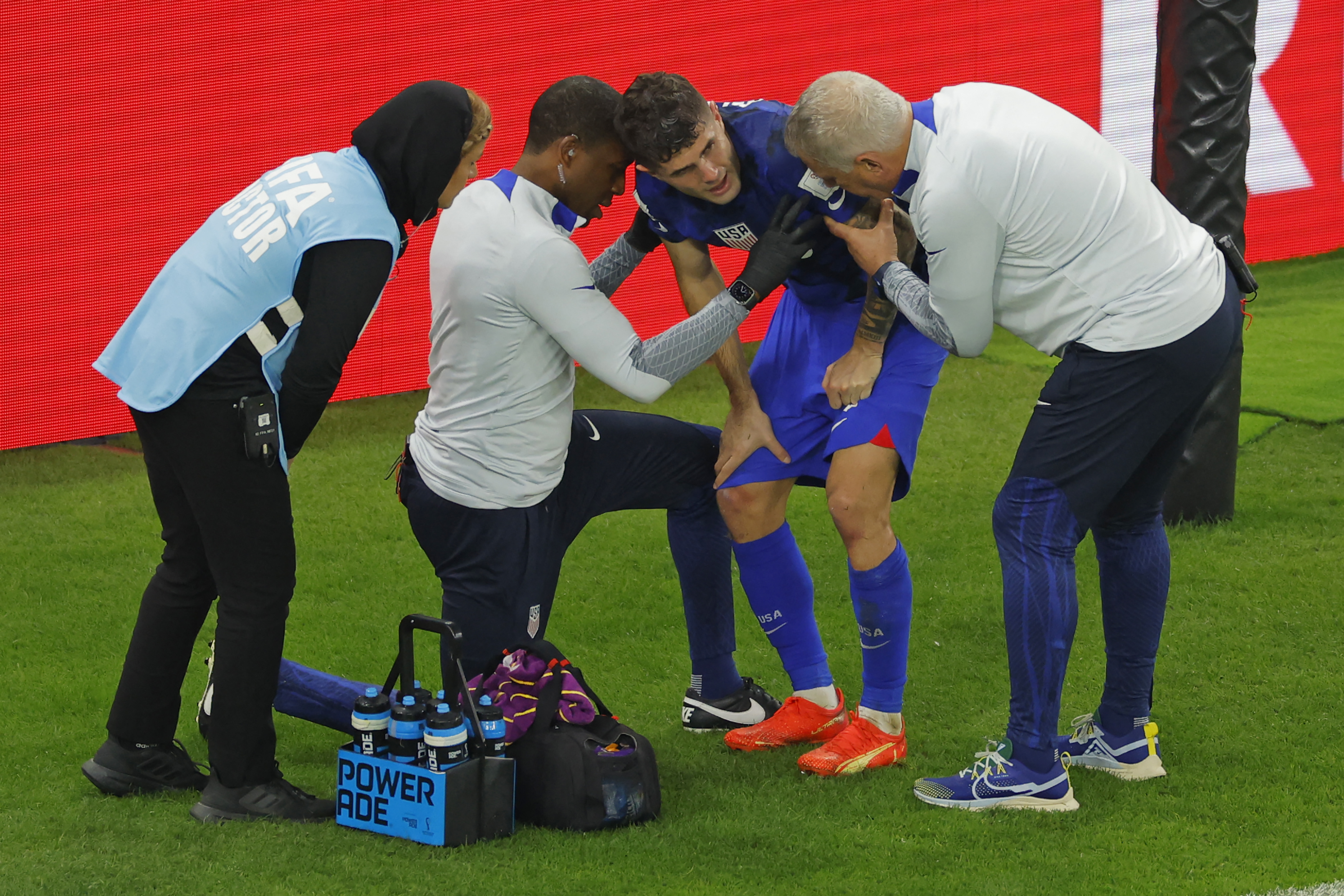
As the FIFA World Cup enters its knockout stage, several high-profile players have dealt with injuries that reflect a familiar challenge in elite soccer: the cumulative effects of tournament fatigue.
Among them are Belgium midfielder Amadou Onana, United States captain Christian Pulisic and England midfielder Jordan Henderson, whose reported injuries came under different circumstances but during a period when players are exposed to repeated physical and mental demands.
Sports medicine specialists say the later stages of major tournaments often coincide with an increase in injuries as recovery time becomes increasingly limited.
Unlike domestic leagues, where clubs typically have a week or more between matches, World Cup teams often play every three to four days. While athletes begin the tournament in excellent physical condition, the compressed schedule can leave muscles, tendons, and joints with less time to recover from repeated high-intensity competition.
Fatigue Affects More Than Physical Strength
Fatigue is not simply a feeling of tiredness. Sports medicine experts describe it as a physiological state that affects multiple body systems, including muscular performance, coordination, reaction time, and decision-making.
Fatigue may reduce an athlete's ability to stabilize joints, absorb force, and maintain proper movement patterns during competition. Those changes can increase stress on muscles and connective tissues, raising the likelihood of strains, sprains, and overuse injuries.
Mental fatigue also plays a role. As concentration declines, players may react more slowly, mistime tackles or land awkwardly after jumps, creating situations that increase injury risk even when physical conditioning remains high.
Why Soft-Tissue Injuries Become More Common
Soft-tissue injuries involving muscles, tendons, and ligaments are among the most common medical problems in professional soccer.
Christian Pulisic appeared to aggravate a left calf injury during the United States' Round of 16 match against Belgium after managing the same issue earlier in the tournament. Calf strains are known to recur when muscles are subjected to intense workloads before they have fully healed.
Similarly, muscle injuries affecting the hamstrings, quadriceps, and groin frequently occur during periods of congested competition because repeated sprinting, accelerating, and changing direction place substantial stress on muscle fibers.
Research published in the National Library of Medicine has found that prior muscle injuries significantly increase the risk of future strains, particularly when athletes return to play before completing rehabilitation.
Recovery Time Matters
Recovery begins immediately after the final whistle, but the body requires time to repair microscopic muscle damage caused by intense exercise.
According to the National Academy of Sports Medicine, recovery includes restoring muscle energy stores, repairing damaged tissue, reducing inflammation, and allowing the nervous system to recover from repeated high-intensity activity.
When matches occur every few days, teams rely on recovery strategies such as hydration, nutrition, sleep optimization, massage, active recovery exercises, and carefully managed training sessions. While these measures can reduce fatigue, they cannot eliminate the body's biological need for time to heal.
Medical staff also monitor players' workloads using GPS tracking, heart-rate data, and other performance metrics to identify athletes who may be at greater risk of injury.
Not Every Injury Is Caused by Fatigue
Although fatigue contributes to many injuries, not every setback during a tournament results from accumulated workload.
Jordan Henderson reportedly sustained a wrist fracture while celebrating England's victory over Mexico, illustrating that accidents unrelated to match play can also occur during emotionally charged moments.
Likewise, contact injuries resulting from tackles, collisions, or falls may happen regardless of a player's level of fatigue. However, sports medicine experts say that tired muscles may be less able to protect joints during sudden impacts, potentially increasing the severity of some injuries.
Can Tournament Injuries Be Prevented?
Complete prevention is not possible in a sport that demands repeated sprinting, rapid changes of direction, and frequent physical contact.
However, injury prevention programs have become an essential part of professional soccer. Many teams incorporate strength training, neuromuscular exercises, flexibility work, and individualized recovery plans designed to reduce injury risk throughout a tournament.
Organizations, including FIFA, have also promoted evidence-based injury prevention initiatives, such as the FIFA 11+ warm-up program, which research has associated with lower rates of certain musculoskeletal injuries when performed consistently.
Sports medicine experts say recognizing early signs of fatigue, including persistent muscle soreness, declining performance and prolonged recovery after matches, may help teams modify training before a minor problem becomes a more serious injury.
A Growing Challenge as the Tournament Continues
As the World Cup progresses, the physical demands on players continue to mount, even for athletes who arrived in peak condition.
Recent injuries involving players such as Amadou Onana, Christian Pulisic and Jordan Henderson reflect the range of medical issues that can arise during a compressed international tournament. Some result from repetitive physical stress, while others occur unexpectedly away from active play.
For team physicians and performance staff, balancing competition with recovery remains one of the most important challenges of the tournament. For players, sufficient rehabilitation, careful workload management, and adequate recovery continue to be the best defenses against injuries that become increasingly common as fatigue mounts.
Published by Medicaldaily.com
Source: Medical Daily